
Bison Belong on the Prairie: Why Montana’s Bison Fight Matters
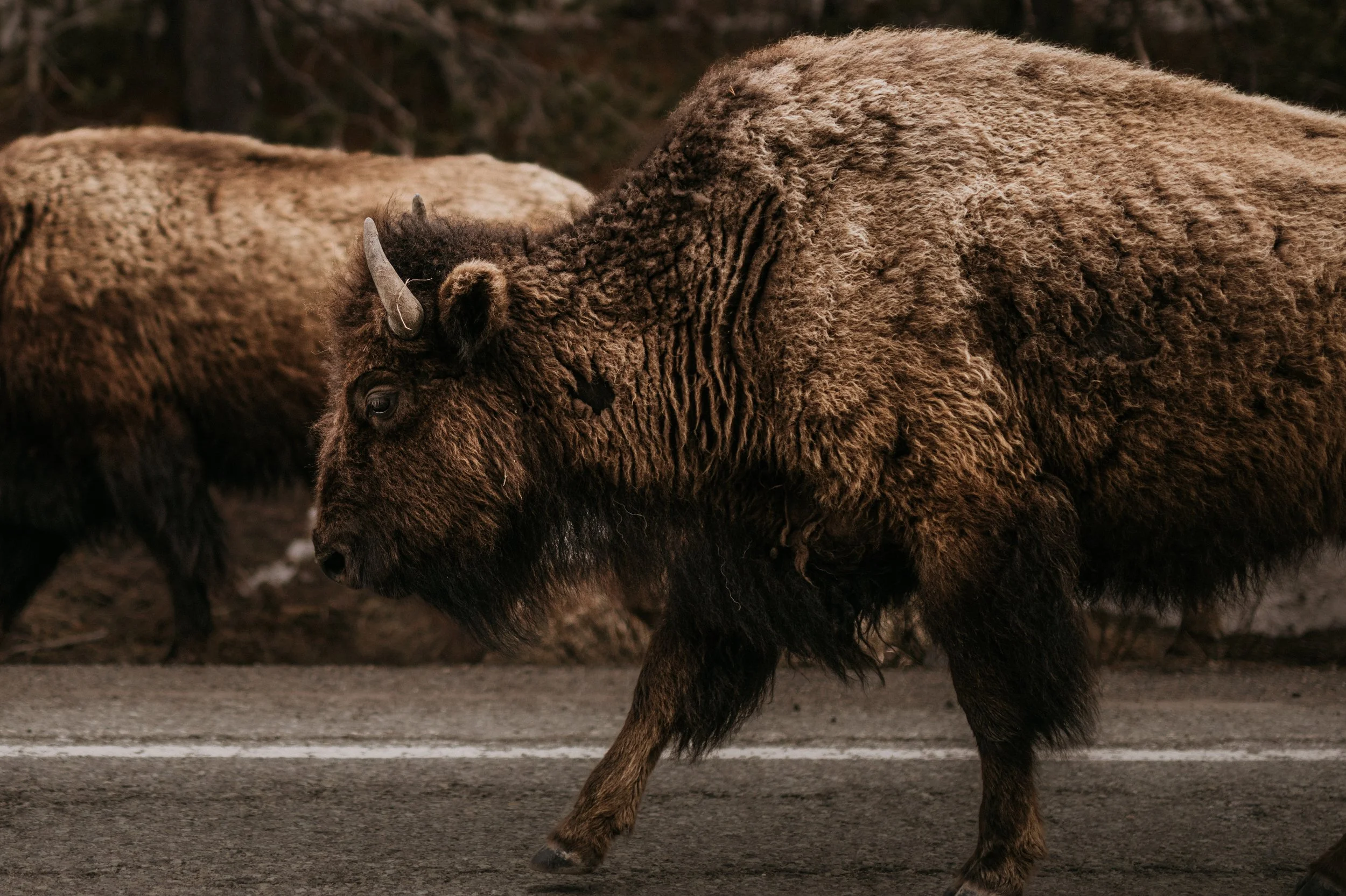
Photograph by Victoria Andreozzi, Yellowstone National Park, 2019
It’s no secret that I love bison. So the news that the federal government is moving to remove hundreds of conservation bison from public lands in Montana is absolutely heartbreaking, and honestly, hard to digest.
This is not just about one herd. It is about land, history, ecology, Indigenous sovereignty, and whether we are willing to repair some of the damage done when bison were nearly wiped out in the 1800s.
The current issue centers on American Prairie, a conservation nonprofit in north-central Montana that has been working to restore prairie habitat and rebuild a large, free-ranging bison herd. In May 2026, the Bureau of Land Management announced that it was revoking American Prairie’s bison grazing authorization on seven federal allotments in Phillips County, Montana. The BLM argued that American Prairie manages its bison primarily for conservation and ecological restoration rather than as “production-oriented” domestic livestock, which the agency says does not qualify under the Taylor Grazing Act. The decision allows for cattle-only permits where appropriate and gives American Prairie time to remove bison from those public lands.
That is a major issue. And it is one that deserves public attention.
Bison Are Native to This Land
Bison are not an invasive species. They are not a nuisance. They are one of the animals that shaped North America.
Before colonization and westward expansion, tens of millions of bison roamed across the continent. They were especially central to the Great Plains, where their grazing, movement, wallowing, manure, and migration patterns helped shape the grasslands themselves.
Their near-eradication happened mostly in the 19th century, not the 18th. The U.S. Fish and Wildlife Service says bison once numbered in the tens of millions, but by 1889 only a few hundred wild plains bison remained. The National Park Service explains that by 1894, Yellowstone National Park held the only known wild herd in the United States.
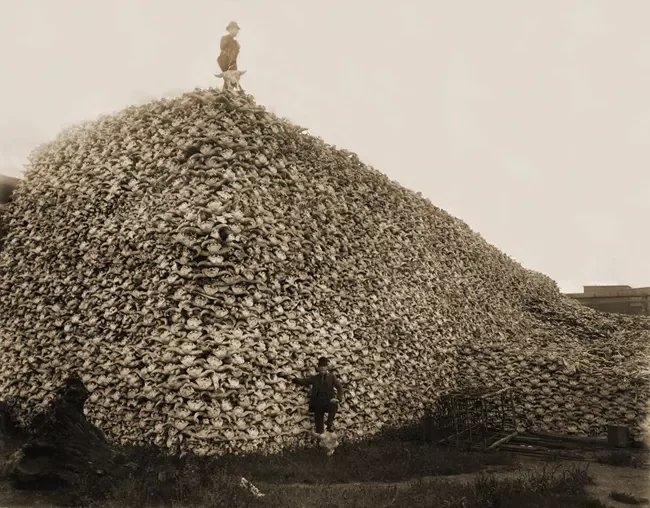
Photograph from 1892 of a pile of American bison skulls waiting to be ground for fertilizer.
Photo/Unknown author/Photo edited by User:PawełMM /Burton Historical Collection, Detroit Public Library
That collapse was not just an ecological tragedy. It was also tied directly to the violent displacement and oppression of Indigenous peoples.
The National Park Service notes that federal officials understood how important buffalo were to Plains Native nations. In the 1800s, the destruction of bison was bound up with U.S. policies meant to force Native people onto reservations and destroy their ability to live independently on their homelands. Read more about this devastating story HERE.
So when we talk about removing bison from public lands today, we should not treat it like a neutral land-use debate. Bison were already deliberately removed once. That removal devastated ecosystems and Indigenous communities. Restoring them is one way of repairing harm.
Why Removing Bison Feels Like Another Form of Colonization
Replacing native bison with cattle is not just a simple swap of one grazing animal for another.
Cattle are domesticated livestock brought to North America through European colonization. Bison are native wildlife that evolved with these landscapes. When public land policy favors cattle while pushing out bison, it repeats a familiar pattern: remove what belongs to the land, then replace it with an imported economic system.
That does not mean every rancher is bad or that all cattle grazing is automatically destructive. But on western public lands, cattle grazing has a long record of ecological harm when poorly managed or placed in sensitive areas. The U.S. Geological Survey notes that domestic livestock grazing, especially overgrazing in drylands, can negatively affect plant communities, biological soil crusts, and soils, leading to increased erosion, runoff, and the spread of undesirable nonnative plants.
The USDA’s own grazing-management guidance also recognizes that grazing has to be carefully managed to protect soil, vegetation, hydrology, streambanks, and water quality.
That is why this issue is so frustrating. We have a native animal that restores prairie processes, and instead of expanding its role on the land, the government is treating conservation bison as a problem because they are not being managed primarily for commercial production.
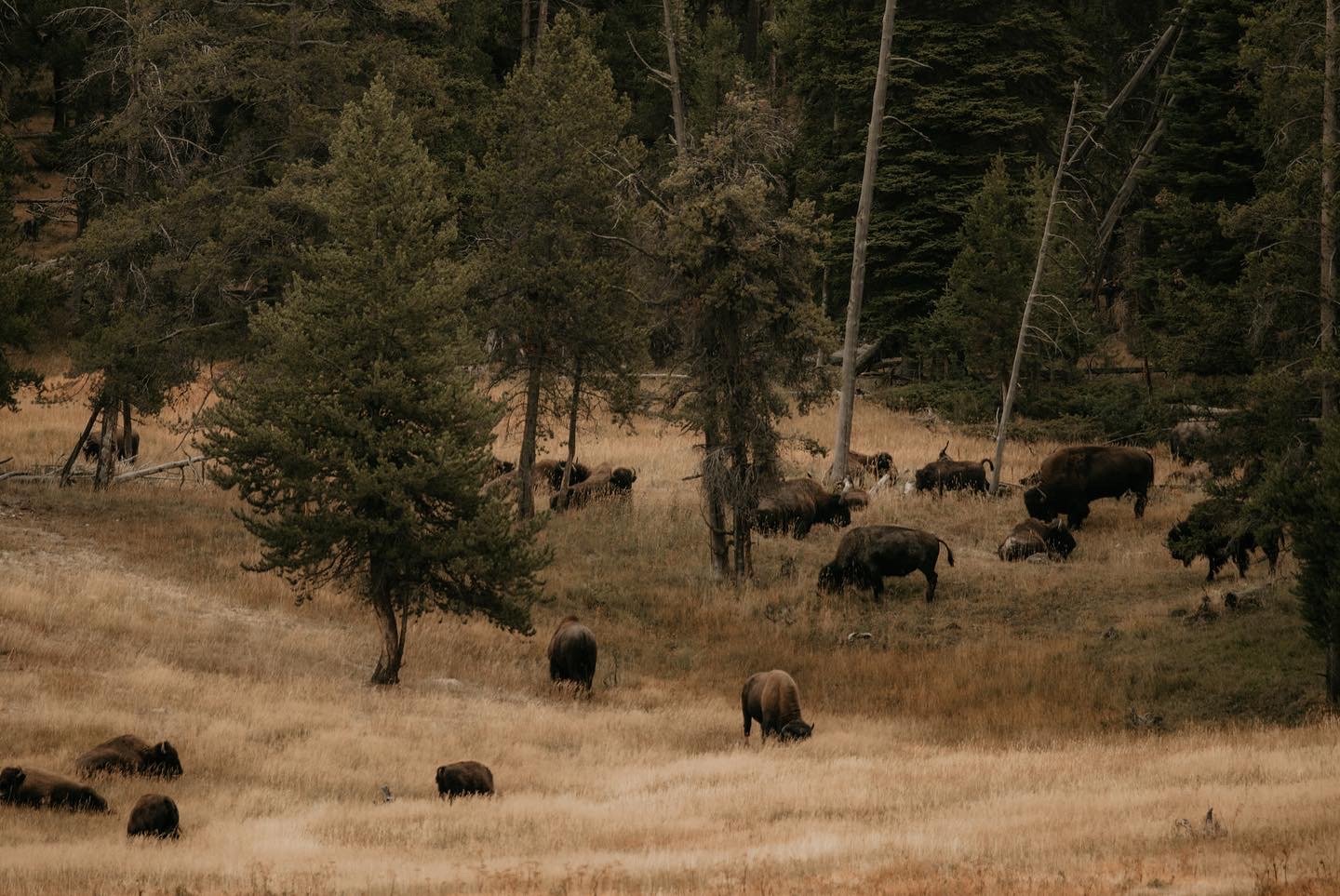
Photograph by Victoria Andreozzi, Yellowstone National Park, 2019
Bison Are Good for Ecosystems
Bison are often called a keystone species or an ecosystem engineer. That means their presence changes the landscape in ways that benefit many other species.
They graze differently than cattle. They move differently. They create wallows. They disturb soil in ways that create habitat. They fertilize the land with manure. Their grazing patterns create a patchwork of vegetation heights, which supports a wider variety of plants, insects, birds, and mammals.
A long-term Kansas State University study found that reintroducing bison to tallgrass prairie doubled plant biodiversity and helped plant communities remain resilient during severe drought. The same research found that cattle can increase plant diversity compared with having no large grazers at all, but the effect of bison was much stronger.
The National Science Foundation summarized the same research, explaining that bison reintroduction increased plant diversity and drought resilience, and that more diverse plant communities support more diverse communities of insects, birds, and mammals.
This is what makes bison restoration so important. It is not just about bringing back an animal. It is about bringing back the ecological relationships that animal creates.
Why Bison Should Stay on Public Lands
Bison should remain on public lands because:
They are native to North America.
Bison belong on these landscapes. They are not an introduced species. They are part of the ecological identity of the Plains.They help restore prairie ecosystems.
Their grazing patterns can increase plant diversity, support native grasses, and create healthier habitat for wildlife.They support biodiversity.
Bison create varied grassland structure, which benefits plants, insects, birds, and mammals. Their wallows can also create unique microhabitats.They are part of soil and nutrient cycles.
Their movement and manure help recycle nutrients across the prairie.They are culturally and spiritually significant to many Indigenous nations.
Buffalo are deeply connected to food, ceremony, identity, sovereignty, and survival for many Native communities.Their near-eradication was part of colonization.
The slaughter of bison in the 1800s was not just an environmental loss. It was connected to policies that harmed Indigenous peoples and forced them from their homelands.Restoring bison is a form of ecological and cultural repair.
Bison restoration can help restore prairie ecosystems while also supporting Indigenous food sovereignty and cultural revitalization.Public lands should serve more than commercial livestock production.
Public lands belong to all of us. They should protect native ecosystems, wildlife, cultural heritage, and future generations.
Why Bison Matter to Indigenous Communities
For many Indigenous nations, buffalo are not just animals. They are relatives, teachers, providers, and a central part of cultural survival.
The National Wildlife Federation states that Tribal people have deep historical, cultural, traditional, and spiritual connections to bison that stretch back thousands of years. It also describes Tribal bison restoration as a way to restore both bison herds and Native cultural connections to buffalo.
The Smithsonian’s National Zoo and Conservation Biology Institute reported on research showing that bison restoration on Tribal lands in the Northern Great Plains can help restore prairie ecosystems while also improving food sovereignty and food security for Native Nations.
That is why the Montana decision is bigger than one conservation nonprofit. Tribal organizations and Indigenous advocates have warned that federal decisions limiting bison restoration could affect broader efforts to rebuild buffalo herds, restore food sovereignty, and support cultural renewal. American Prairie has said groups including the Coalition of Large Tribes and several Tribal and conservation organizations protested the BLM proposal.
When bison are removed from land, it is not just wildlife policy. It touches a much deeper history.
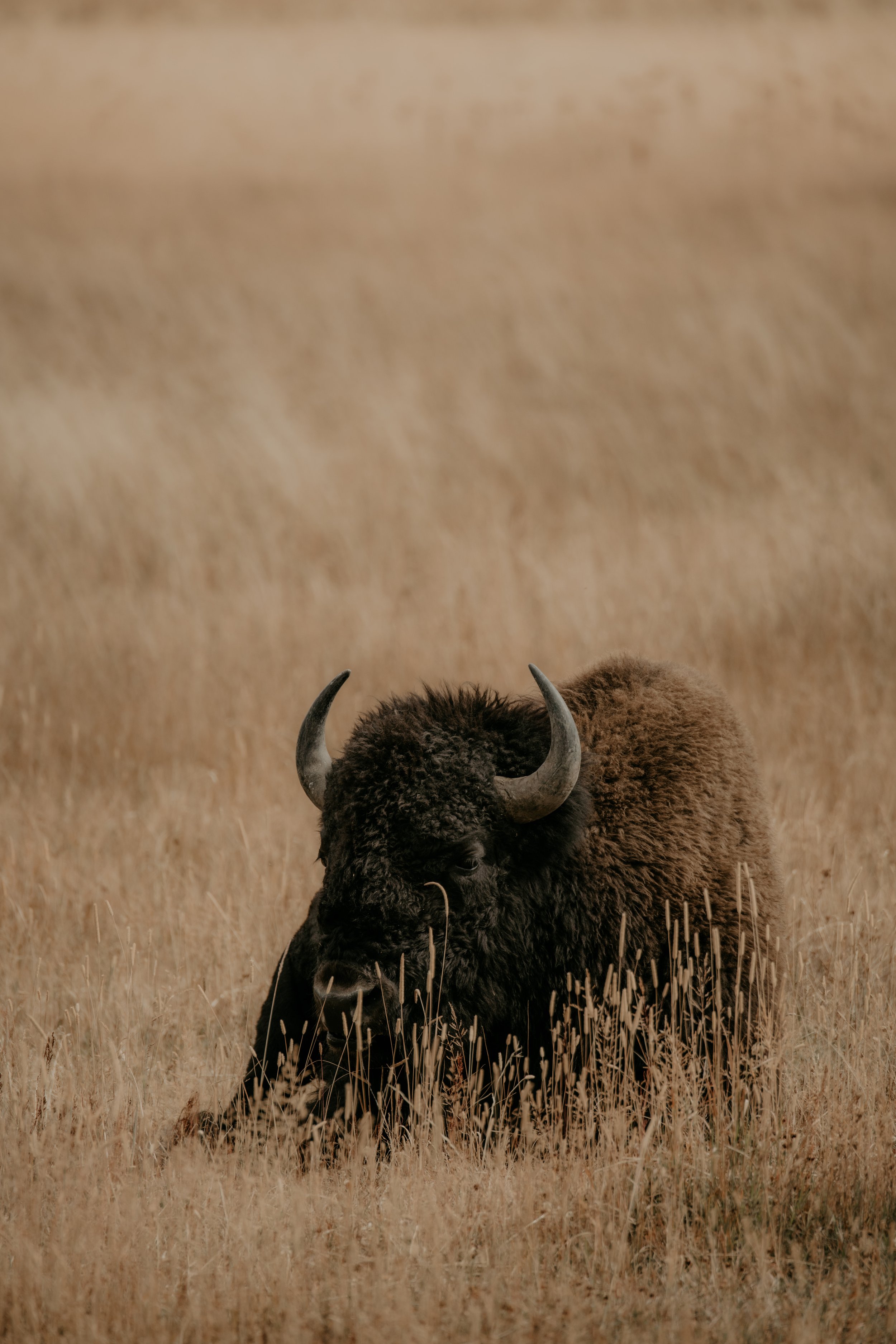
Photograph by Victoria Andreozzi, Yellowstone National Park, 2020
The Montana Decision
American Prairie has been working for years to create a large connected prairie ecosystem in north-central Montana. The organization’s long-term vision is to connect private and public lands into a larger landscape where native wildlife, including bison, can thrive.
The current dispute involves public grazing allotments in Phillips County. The BLM says American Prairie’s bison are being managed primarily for conservation and ecological restoration, rather than as production livestock, and therefore do not qualify for the grazing permits under the agency’s interpretation of the Taylor Grazing Act.
Local ranching groups have supported the decision, arguing that those lands should be used for livestock production and local agricultural economies. The Montana Farm Bureau, for example, celebrated the decision as a win for livestock grazing and rural communities.
But conservation groups see the decision very differently. American Prairie has challenged the BLM’s proposed revocation, arguing that it reverses long-standing federal practice and undermines conservation use of public lands.
At its core, this is a fight over what public lands are for. Are they only for livestock production? Or can they also be used to restore native species, repair ecological damage, and support broader public values?
What We Can Do
This decision is not something people have to quietly accept. There are still ways to help.
1. Contact elected officials
People can contact their members of Congress and ask them to pressure the Department of the Interior and BLM to reverse course.
A simple message could be:
“I am asking you to oppose the Bureau of Land Management’s decision to revoke American Prairie’s bison grazing authorization in Montana. Bison are native to these lands, are essential to prairie restoration, and are culturally significant to many Indigenous nations. Public lands should support native ecosystem restoration, not remove conservation bison in favor of cattle-only grazing.”
2. Support American Prairie
American Prairie is directly involved in the fight and has been challenging the BLM decision. Supporting their work, sharing their updates, and directing people to their public information helps keep attention on the issue.
3. Support legal and conservation organizations
Groups involved in public lands, wildlife restoration, Indigenous food sovereignty, and bison conservation are important in fights like this. Legal challenges and policy advocacy require resources.
4. Share accurate information
This issue can be easy to oversimplify. The most accurate framing is:
The Trump administration, through the BLM, is moving to remove American Prairie’s conservation bison from certain federal public grazing lands in Montana and prioritize cattle-only grazing permits on those allotments.
That wording is strong, but it avoids claiming that all bison are being removed from Montana.
5. Center Indigenous voices
This is not only a conservation issue. It is also connected to Indigenous history, sovereignty, food systems, and cultural restoration. Any conversation about bison should make space for Native-led buffalo restoration efforts and the communities most deeply connected to these animals.
A book I highly recommend on this topic is Buffalo for the Broken Heart: Restoring Life to a Black Hills Ranch by Dan O’Brien.
It is a personal, beautifully written story about a rancher rethinking his relationship with the land and beginning to understand how buffalo can help restore a damaged prairie ecosystem. What makes the book so powerful is that it does not read like a textbook. It reads like someone slowly realizing that the land itself has been asking for something different.
For anyone trying to understand why bison matter, this is a great place to start. It helps explain how land shaped by cattle can begin to heal when buffalo return. It also makes the ecological argument feel human and accessible, which is exactly what this topic needs.
Bison are not symbols of the past. They are part of the future of prairie restoration.
They belong on these lands because they helped create these ecosystems. They matter because their removal was tied to colonization and Indigenous dispossession. They matter because their return can help restore biodiversity, soil health, cultural connection, and ecological balance.
Removing conservation bison from public lands in Montana is not just a bureaucratic grazing decision. It is part of a much larger question: Are we willing to repair what was broken, or are we going to keep repeating the same mistakes?
Bison belong on the prairie. Public lands should help bring them home.
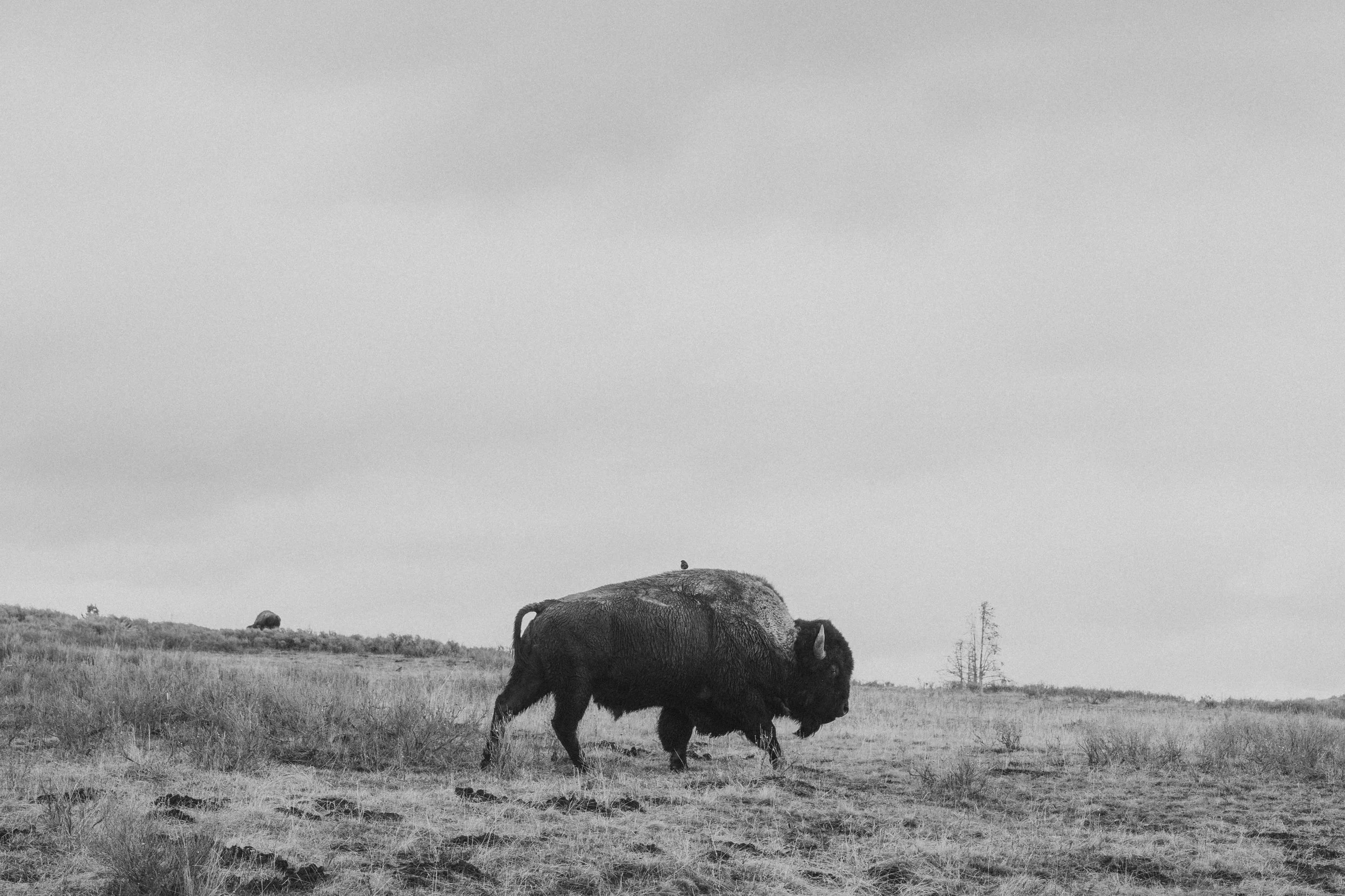
Photograph by Victoria Andreozzi, Yellowstone National Park, 2019